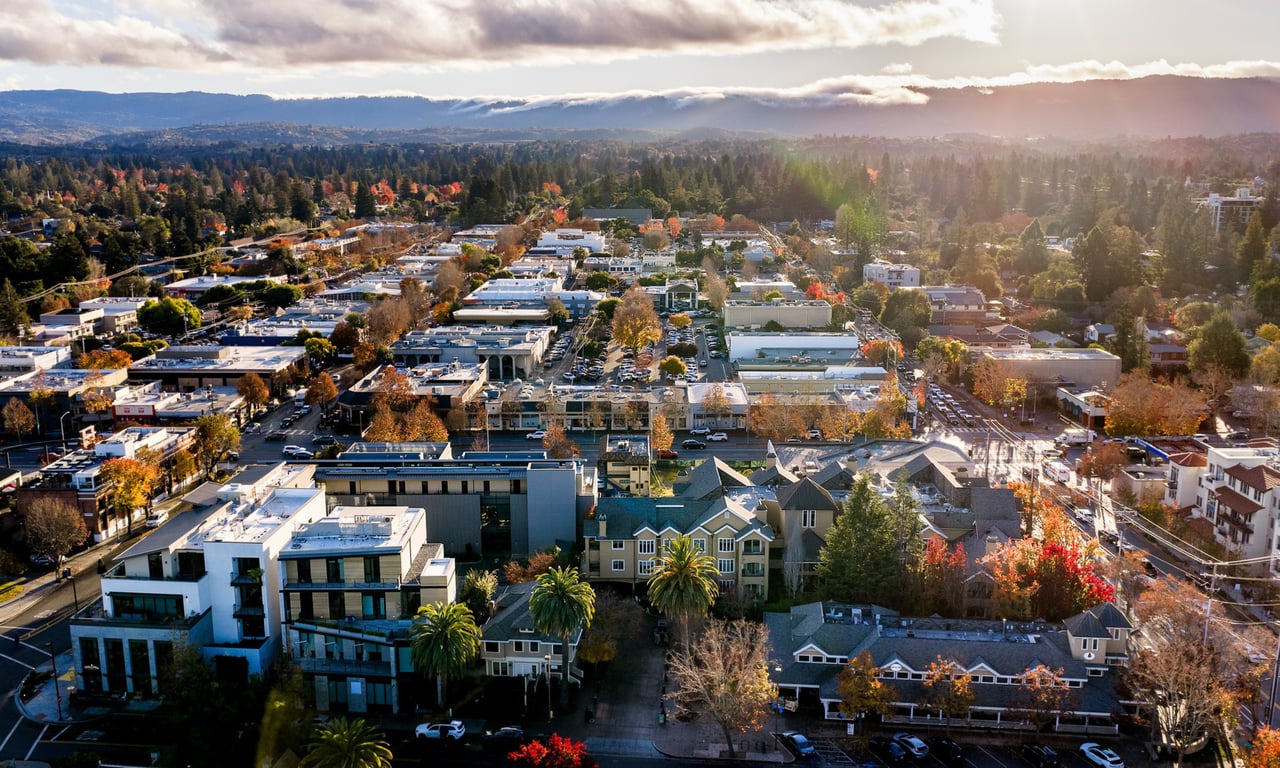
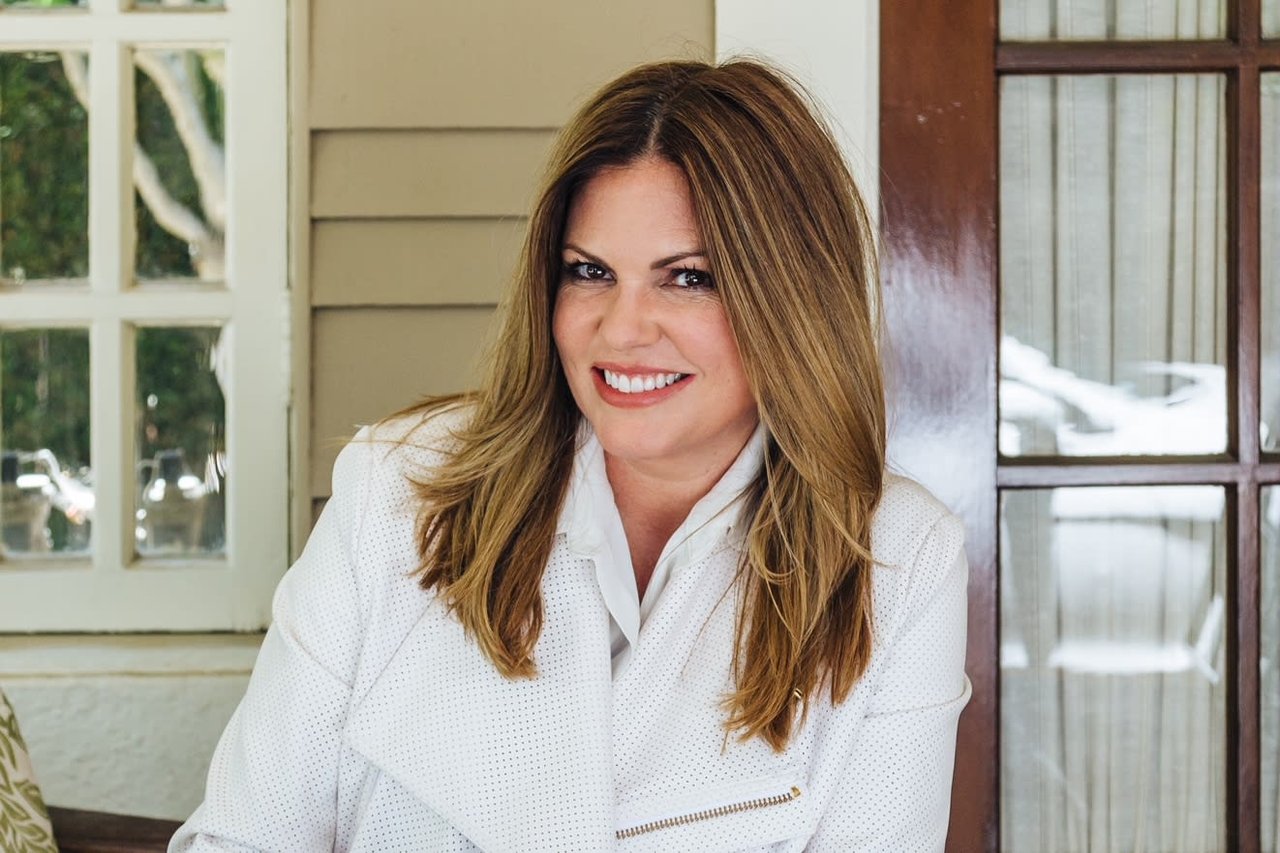
I grew up in the heart of the Peninsula. Burlingame specifically, where I attended Burlingame High School, played Division I basketball on a scholarship to University of the Pacific, and eventually built a 20-year real estate career selling homes from San Francisco to San Jose. I know these streets the way you only can when you have lived them, not just studied them. It is fair to say that the Peninsula is one of the most compelling places in California to put down roots. In this blog I combined some research and my personal experience to provide a breakdown of the most sought after peninsula cities, why it draws people the way it does, and to help new buyers understand where it came from.
Long before the tech industry existed, the San Francisco Peninsula was where San Francisco's wealthiest families came to escape the city. In the 1860s, financiers and industrialists began building grand estates along the El Camino Real corridor, drawn by what one prominent banker described at the time as the Peninsula's "warm, tranquil setting of oak-clad rolling hills nestled between San Francisco Bay and the Pacific Coastal Range."
Source: City of Burlingame Historical Records, referencing William C. Ralston's characterization of the Peninsula upon visiting in the 1860s. Burlingame.org.
The city of Burlingame itself takes its name from Anson Burlingame, Abraham Lincoln's Ambassador to China, who was so taken with the area after a single visit in 1866 that he purchased roughly 1,000 acres of land at what is now the heart of the city. The railroad came to the Peninsula in 1863, and with it, the daily commute to San Francisco became possible. The Peninsula's identity as a place where people lived well and worked in the city was established before the 20th century even began.
Source: Burlingame Historical Society, burlingamehistoricalsociety.org; City of Burlingame, burlingame.org
Millbrae's story is similar. The land was purchased from a Californian family by gold rush entrepreneur Darius Ogden Mills in 1860 for $20,000. He named his estate Millbrae by combining his own name with the Scottish word for rolling hills "brae" and built a grand estate with a conservatory, carriage house, elaborate gardens, and dairy operations. The estate sat largely intact until the 1950s, when it was subdivided and became the residential Millbrae we know today.
Source: Millbrae History, thesanfranciscopeninsula.com; Wikipedia, Millbrae, California
San Bruno's history runs through that same 1860s land story, though its path to becoming desirable took longer, and took a different route. Spanish naval officer Captain Bruno Heceta explored the western shore of the bay in 1775 and named the mountain overlooking the area after his patron saint, giving the city its name decades before it existed. In the 1820s, the Mexican government awarded the land to Jose Antonio Sanchez for his military service, and his property stretched from San Bruno Mountain south to Burlingame. After Sanchez died in 1843 and the United States won the Mexican-American War in 1848, his heirs lost the land through the American court system, and much of it was purchased by Darius Mills, the same Bank of California founder who would go on to build the Millbrae estate next door. By the early 1850s, a lean-to built at what is now El Camino and San Mateo Avenue was already serving as a waypoint for changing and watering horses on the road between San Jose and San Francisco. Where Burlingame and Millbrae became grand estates built for leisure, San Bruno's early identity was working infrastructure, a crossroads people passed through rather than a destination they built for. That would not change until the 20th century, when the railroad, the airport, and eventually the city's own transit hub turned it into a destination in its own right.
Source: City of San Bruno, sanbruno.ca.gov
San Carlos was incorporated in 1925, when a civic booster named Frederick Drake coined the phrase that still defines the city today: "The City of Good Living." San Mateo's earliest residential subdivisions trace back to the same era, when the servants, tradespeople, and support staff of the great Peninsula estates began building their own communities adjacent to the old family properties.
Source: City of San Carlos, cityofsancarlos.org; A Brief History of San Mateo, burlingameproperties.com
I tell you all of this not as a history lecture, but because it matters to understanding why the Peninsula holds its value, its character, and its appeal the way it does. These communities were not built as bedroom suburbs of Silicon Valley. They were built as places worth living in for their own sake, with real downtowns, real schools, real community institutions. Tech has intensified demand and raised prices dramatically. But the underlying desirability was here long before the first line of code was ever written.
Now let me tell you what each city actually offers in 2026.
Burlingame is my hometown, which means I am biased. It also means I know it more thoroughly than anyone who hasn't lived here for decades can. And what I can tell you is that Burlingame's reputation among Peninsula cities is earned, not marketed.
The city has two distinct downtowns with Burlingame Avenue and Broadway and each with its own character. Burlingame Avenue is the more upscale of the two: independent restaurants, retail stores, boutiques, coffee shops that people actually linger in, and a farmer's market that draws the whole community on Saturdays. Broadway is slightly more casual, with a strong local dining scene, mom-and-pop owned businesses, and the kind of neighborhood energy that you feel immediately when you walk it. Most Peninsula cities have one good commercial strip. Burlingame has two.
The tree canopy throughout Burlingame's residential neighborhoods is something visitors comment on immediately. Its nickname, “The City of Trees” is not an affectation in fact John McLaren began planting the elm and eucalyptus trees that line El Camino Real in 1875, and the residential neighborhoods that followed maintained that character. Walking the Easton Addition or the streets around Ray Park on a spring afternoon, you understand why people who grew up here find it almost impossible to imagine living anywhere else.
Source: A Brief History of Burlingame, burlingameproperties.com; Burlingame Historical Society, burlingamehistoricalsociety.org
Burlingame High School ranks in the top 3% of all California high schools according to SchoolDigger's 2025 data, and holds a 5-star rating, the highest available. In standardized testing, 82.57% of Burlingame High 11th-graders scored proficient or better in English Language Arts, compared to 56.96% statewide. In mathematics, 65.82% scored proficient, versus 30.5% statewide. It ranks first among all high schools in the San Mateo Union High School District.
Source: SchoolDigger.com, schooldigger.com/go/CA/schools/3498005920/school.aspx; Public School Review, publicschoolreview.com
The Burlingame Elementary School District feeds into the high school system, and several of its elementary schools including Hoover Elementary and Lincoln Elementary consistently rank among the top performers in California. There is no enrollment lottery. You live in the district, your child attends the local school. That distinction matters enormously to families coming from San Francisco, where the SFUSD lottery system can place a child in a school across town.
Burlingame sits at almost exactly the geographic midpoint of the Bay Area corridor. Caltrain from Burlingame to San Francisco's 4th and King station runs 30 to 35 minutes. To Palo Alto and the South Bay tech campuses, you are looking at 25 to 40 minutes by car on 101 or 280 depending on traffic. For professionals who split their time between San Francisco and the South Bay, Burlingame is arguably the most logistically sensible address on the entire Peninsula.
Burlingame commands a premium among Peninsula cities, and it is a premium that has historically been justified by appreciation performance. Median single-family home prices in 2026 run approximately $2.2M to $5M depending on neighborhood and condition. The Easton Addition and the streets bordering Hillsborough consistently see the highest prices. San Mateo County as a whole with Burlingame among its strongest markets had a median home price of approximately $2.07M as of late 2025, and remains the only county in California where buyers need to earn more than $500,000 annually to qualify for a median-priced home.
I say this without reservation: San Mateo is the most undervalued city on the Peninsula relative to what it actually offers. It doesn't carry the name-cache of Burlingame or Hillsborough, and buyers who focus on address prestige sometimes overlook it as a result. The buyers who look past that are the ones who actually do their research and almost always end up extremely happy.
Third Avenue in downtown San Mateo is one of the genuinely great dining streets in the Bay Area. Not great for a suburb, just great, period. The concentration of quality independent restaurants along a three-block stretch is remarkable, and the walkability from adjacent neighborhoods like Baywood and Beresford is exceptional. A Caltrain station sits in the heart of downtown, making car-free access to San Francisco and the South Bay straightforward.
The city is large enough to have genuine amenities with a real downtown, multiple grocery options, and diverse neighborhoods while remaining small enough that it does not feel impersonal. San Mateo has a civic culture that punches above its weight: the Art and Wine Festival, the Japanese Garden in Central Park, and a community events calendar that reflects genuine local investment in the quality of life.
San Mateo's public schools operate through the San Mateo-Foster City School District at the elementary and middle level, and the San Mateo Union High School District at the high school level. San Mateo High School, while it doesn't carry the national name recognition of Burlingame High or Palo Alto High, is a well-regarded school with strong academic programming and a diverse student body. Families who value a balanced academic environment that is rigorous without the pressure-cooker culture that can come with the most nationally ranked schools often find it to be exactly what they were looking for.
San Mateo's median single-family home price runs approximately 10 to 15% below Burlingame for comparable properties. According to Redfin MLS data for the three months ending May 2026, San Mateo's overall median home price was $1.8M, up 13% year over year. Homes are moving in approximately 13 days on market, indicating strong and persistent demand.
Source: Redfin Housing Market Data, San Mateo, May 2026. redfin.com/city/17490/CA/San-Mateo/housing-market
What this means in practice: a buyer who cannot quite reach the Burlingame market often finds that San Mateo gives them equivalent quality of life, comparable schools, and a stronger value proposition per dollar spent. I have sold homes in both cities for over 20 years and I have watched this play out consistently.
Millbrae doesn't always make it onto buyers' shortlists the way Burlingame or San Carlos do. That is a mistake, and the buyers who discover it often wonder why it took them so long.
Millbrae Station is the only station in the entire Bay Area transit network where BART and Caltrain connect under the same roof, with a cross-platform transfer. That means you can walk from a Caltrain car directly onto a BART platform and be in downtown San Francisco, the East Bay, or at San Francisco International Airport without changing systems or going outside.
Source: Wikipedia, Millbrae station, en.wikipedia.org/wiki/Millbrae_station; BART Official Station Information, bart.gov/stations/mlbr
For frequent flyers, that SFO connection is not a minor convenience. It is a genuine quality-of-life differentiator. One BART stop separates Millbrae from the airport. If you travel for work regularly, live in Millbrae, and your destination is any major hub with BART or SFO access, the logistics of your daily life become dramatically simpler.
Millbrae is also planning for California's high-speed rail network. According to the City of Millbrae's own planning documents, Millbrae Station is planned as the only high-speed rail station between San Jose and San Francisco, and will be the only such station in California with a direct link to a major international airport.
Source: City of Millbrae Request for Qualifications, August 2025. ci.millbrae.ca.us
The name Millbrae comes directly from the estate of Darius Ogden Mills, who purchased the land in 1860. Mills combined his name with the Scottish word for rolling hills to name his estate, which remained largely intact as a grand property until the 1950s. The mansion burned in 1954 and the land was subsequently subdivided into what is now the residential Millbrae we know today.
Source: Millbrae History, thesanfranciscopeninsula.com; Wikipedia, Millbrae, California
The resulting city has a genuine small-town character that sits in pleasant contrast to its transit connectivity. Downtown Millbrae has its own dining scene, nothing as expansive as San Mateo's Third Avenue, but a walkable, neighborhood-scale collection of restaurants and shops within easy reach of residential streets. The community has a tightly integrated feel, shaped in part by the shared civic identity that came from Millbrae's hard-fought incorporation battle against Burlingame in the 1940s.
Millbrae schools operate under the Millbrae Elementary School District for K-8, and feed into the San Mateo Union High School District, where students primarily attend Mills High School. School quality is solid and competitive, though it doesn't carry the same rankings as Burlingame High.
Millbrae generally runs slightly below Burlingame on price while offering many of the same locational advantages. For buyers who are primarily optimizing for transit access and SFO proximity, the value proposition is compelling. The area is also seeing significant new mixed-use development around the station, including the Gateway at Millbrae Station project, which will add residential units, hotel, retail, and life sciences office space in the transit area.
Source: City of Millbrae Planning Documents, 2025
San Bruno doesn't get mentioned in the same breath as Burlingame or San Carlos, and right now, that's the opportunity. This is a city in the middle of the most significant build-out happening anywhere on the Peninsula. YouTube is expanding its headquarters campus on Cherry Avenue. The old Tanforan mall site is being redeveloped into a transit-oriented neighborhood with well over 1,000 new homes planned. Directly across from the BART station, a 28-acre life-science and office campus is going up. San Bruno in 2026 is a city being actively rebuilt around serious employers and serious investment, and buyers who look at it now are looking at it before that story is fully told.
|Source: KRON4, kron4.com, November 2023
San Bruno is a small town that happens to sit in the middle of some very large things. San Francisco International Airport borders it to the east. None of the development has erased the town's character. San Mateo Avenue, its historic downtown drag, still has the look of an early-20th-century Peninsula main street, with a Sunday farmers market and a mix of inexpensive, genuinely good ethnic food options that reflect the city's diversity. The residential neighborhoods, especially the mid-century streets around Crestmoor, have a settled, cohesive, family-oriented feel that residents describe as a small town that happens to be surrounded by very big employers.
Source: San Francisco Peninsula, thesanfranciscopeninsula.com; Wikivoyage, en.wikivoyage.org/wiki/San_Bruno
This is where San Carlos genuinely stands apart. The San Carlos School District K-8 is one of the most consistently high-performing in the state. In January 2023, the California Department of Education released its list of distinguished elementary schools and every single elementary school in San Carlos made the list. Of 5,872 elementary schools in California, only 356 were selected, approximately 6%. White Oaks Elementary ranks approximately 5th among all California elementary schools; Central Middle School ranks around 100th among all California middle schools.
High school students in San Carlos feed into the Sequoia Union High School District, attending either Carlmont High School (northern San Carlos) or Sequoia High School (southern San Carlos) depending on their address. Carlmont is a well-regarded school with a rigorous AP curriculum. Verify your specific address for high school assignment, as the boundary runs through the middle of the city.
Source: SchoolDigger.com, schooldigger.com/go/CA/schools/3498005921/school.aspx
San Bruno has its own BART station, making it one of the few Peninsula cities with direct BART access, in addition to nearby Caltrain service in Millbrae and San Bruno's SamTrans bus network. It is also the closest city to SFO outside of San Francisco itself. For commuters heading into downtown San Francisco or across to the East Bay via BART, San Bruno offers a level of transit flexibility that Burlingame and San Carlos, both Caltrain-only, don't have.
Source: Wikivoyage, en.wikivoyage.org/wiki/San_Bruno
San Bruno's pricing sits below Burlingame, San Carlos, and comparable Peninsula cities, and that gap exists alongside the scale of investment currently landing in the city. Recent data puts the citywide median sale price somewhere in the $1.2M to $1.4M range depending on the data source and property mix, with single-family homes typically running higher than that blended figure. You should verify current pricing directly against MLS data before quoting specific figures to a client, since San Bruno's median swings more than most Peninsula cities month to month due to the mix of condos, older starter homes, and larger view properties that close in any given period.
Source: Redfin, redfin.com/city/16671/CA/San-Bruno/housing-market, May 2026; Zillow, zillow.com/home-values/13691/san-bruno-ca
The nickname has been around since 1925, when a civic booster named Frederick Drake coined it during the city's incorporation campaign. One hundred years later, the phrase still fits. San Carlos earned its centennial in 2025. The city celebrated the milestone with a year of community events and a historical retrospective, and it has spent those 100 years quietly accumulating the kind of reputation that comes from actually delivering on its promises.
Source: City of San Carlos, cityofsancarlos.org; The Almanac, almanacnews.com, September 2025
The downtown on Laurel Street is the best example I know of what a Peninsula downtown can be. It is not trying to be something it isn't. It's walkable, locally owned, full of independent restaurants and shops, and genuinely used by residents rather than tourists. The San Carlos Caltrain station sits right at the edge of downtown, so the walkability is not limited to errands, it extends to your commute.
San Carlos has 16 parks distributed across its neighborhoods, giving it one of the highest parks-per-resident ratios of any Peninsula city. The community events calendar like the Night of Holiday Lights, summer movie nights at Burton Park, and the longtime calendar of farmers markets and street fairs reflects a city that actively invests in the experience of living there.
Source: City of San Bruno, sanbruno.ca.gov
This is where San Carlos genuinely stands apart. The San Carlos School District K-8 is one of the most consistently high-performing in the state. In January 2023, the California Department of Education released its list of distinguished elementary schools and every single elementary school in San Carlos made the list. Of 5,872 elementary schools in California, only 356 were selected, approximately 6%. White Oaks Elementary ranks approximately 5th among all California elementary schools; Central Middle School ranks around 100th among all California middle schools.
High school students in San Carlos feed into the Sequoia Union High School District, attending either Carlmont High School (northern San Carlos) or Sequoia High School (southern San Carlos) depending on their address. Carlmont is a well-regarded school with a rigorous AP curriculum. Verify your specific address for high school assignment, as the boundary runs through the middle of the city.
Source: City of San Bruno, sanbruno.ca.gov
San Carlos sits at a price point slightly below Burlingame and generally comparable to or slightly above San Mateo, depending on the specific neighborhood and property type. Entry-level single-family homes start in the $1.4M to $2M range; hillside and custom homes run $2M to $3M and above. According to demographic data from 2025, the median household income in San Carlos's 94070 zip code was approximately $235,373 which is well above the national median and reflective of the community's affluence and the demand for homes there.
Inventory is consistently tight. Well-priced, move-in-ready homes often receive multiple offers within the first week. The combination of top-rated K-8 schools, Caltrain access, and Laurel Street walkability creates demand that runs through every market cycle.
After 20 years of helping buyers navigate this exact decision, here is what I have found actually drives the choice:
San Carlos wins on K-8. Burlingame wins on high school. Both are excellent choices but the distinction is real with smaller than the price premium alone might suggest.
Burlingame, Millbrae and San Bruno are your strongest options. Both have Caltrain access that puts you in the city in 30 to 35 minutes. Millbrae adds BART flexibility if your SF destination is better served by that line.
All four cities work. San Carlos and San Mateo sit closer to the midpoint of the corridor, which matters if you are going to the South Bay regularly. Those that need to split their time between South Bay and San Francisco then Burlingame would be your better choice.
Millbrae is one BART stop from San Francisco International Airport. No other Peninsula city offers that. San Bruno goes a step further: it borders SFO directly and is the closest city to the airport outside of San Francisco itself, with its own BART station in addition.
San Mateo, San Carlos, or San Bruno. San Bruno in particular runs below all four other cities on price right now, which is part of what makes it worth watching. San Mateo has the stronger restaurant scene; San Carlos has the stronger K-8 schools; San Bruno has the lowest entry point on the Peninsula corridor today.
San Bruno. YouTube's campus expansion, the Southline life-science development, and the Tanforan redevelopment are bringing more investment into this city right now than anywhere else on the Peninsula. Buyers who get in ahead of that build-out are buying into a city whose identity is actively being rewritten.
Burlingame, and I say that as someone who grew up there and knows its limitations as well as its strengths. Two downtowns, top-ranked schools, the geographic midpoint of the corridor, and 160 years of building exactly the kind of community that holds its value through every market cycle.
The pricing estimates in this article reflect general 2026 market conditions based on MLS trend data and 20 years of professional experience in these markets. Individual properties vary significantly by neighborhood, condition, and timing. San Mateo County remains one of the two most expensive housing markets in California, with a median home price of approximately $2.07M as of late 2025.
Source: California Association of Realtors Housing Affordability Report, Q4 2025, as reported by Palo Alto Online, February 2026. paloaltoonline.com
For current listing data and pricing specific to your budget and timeline, the right next step is a conversation.
I have sold homes in all four of these cities. I know which blocks flood, which school feeder paths matter, which neighborhoods are appreciating fastest, and how to structure an offer that actually wins.
If you are trying to decide between these cities, the most useful thing I can do is spend 30 minutes with you on the phone going through your specific situation. Commute, family, budget, timeline. Every answer is different.
Jacklyn O'Connor Friedland
Compass | Burlingame, CA
(650) 766-0791
CA DRE# 01726418
Serving San Francisco, Burlingame, San Mateo, Millbrae, San Carlos, Hillsborough, Belmont, Redwood City, and the full Bay Area corridor from SF to San Jose.
This article is for informational purposes only. Market data reflects available MLS information and published reports and is subject to change. Verify all figures with primary sources before relying on them. Contact a licensed real estate professional for current pricing and availability.
All sources used in this article are listed below. Statistics should be verified against primary sources before publication.
1. City of Burlingame — History of Burlingame
burlingame.org/165/History-of-Burlingame
2. Burlingame Historical Society — History of Burlingame
burlingamehistoricalsociety.org/explore/history-of-burlingame
3. Burlingame Properties — A Brief History of Burlingame
burlingameproperties.com/resources/brief-history-of-burlingame
4. The San Francisco Peninsula — Millbrae History
thesanfranciscopeninsula.com/about-us/san-mateo-county-history/millbrae
5. Wikipedia — Millbrae, California
en.wikipedia.org/wiki/Millbrae,_California
6. Wikipedia — Millbrae Station
en.wikipedia.org/wiki/Millbrae_station
7. BART Official — Millbrae Station
bart.gov/stations/mlbr
8. City of Millbrae — Request for Qualifications, August 2025 (High-Speed Rail / Transit Station Planning)
ci.millbrae.ca.us/DocumentCenter/View/2733/RFQ-Multi-modal-Integrated-Transit-Concept-Plan-PDF
9. City of Burlingame — Brief History (Burlingame Properties)
burlingameproperties.com/resources/brief-history-of-burlingame
10. SchoolDigger — Burlingame High School Profile and Rankings
schooldigger.com/go/CA/schools/3498005920/school.aspx (2025 data)
11. Public School Review — Burlingame High School
publicschoolreview.com/burlingame-high-school-profile
12. Redfin — San Mateo Housing Market Data, May 2026
redfin.com/city/17490/CA/San-Mateo/housing-market
13. Palo Alto Online — San Mateo, Santa Clara Counties Top State's Priciest Housing Markets, February 2026
paloaltoonline.com/real-estate/2026/02/20/san-mateo-santa-clara-counties-top-states-priciest-housing-markets (cites California Association of Realtors Q4 2025 Housing Affordability Report)
14. City of San Carlos — About San Carlos / History
cityofsancarlos.org/community/about_san_carlos.php
15. San Carlos Life — Why San Carlos is the City of Good Living
sancarloslife.com/about-san-carlos (citing California Department of Education 2023 Distinguished Schools data)
17. The Almanac — Downtown San Carlos Centennial Feature, September 2025
almanacnews.com/neighborhood/2025/09/11/find-these-sights-and-bites-downtown-in-silicon-valleys-city-of-good-living
18. Burlingame Properties — A Brief History of San Mateo
burlingameproperties.com/resources/a-brief-history-of-san-mateo
19. City of San Bruno — History
sanburno.ca.gov
20. The San Francisco Peninsula — San Bruno Overview
thesanfranciscopeninsula.com
21. Wikivoyage — San Bruno Travel Guide
en.wikivoyage.org/wiki/San_Bruno
22. Wikipedia — San Bruno, California
almanacnews.com/neighborhood/2025/09/11/find-these-sights-and-bites-downtown-in-silicon-valleys-city-of-good-living
23. KRON4 — YouTube Opens New Offices in San Bruno, November 2023
kron4.com
24. SchoolDigger — Capuchino High School Profile and Rankings
schooldigger.com/go/CA/schools/3498005921/school.aspx
25. Bay Area Rapid Transit — San Bruno Station
bart.gov/stations/sbrn
25. Redfin — San Bruno Housing Market Data, May 2026
redfin.com/city/16671/CA/San-Bruno/housing-market
26. Zillow — San Bruno Home Values (ZHVI)
zillow.com/home-values/13691/san-bruno-ca
As a trusted Realtor to the San Francisco 49ers and Oakland Raiders organizations, her expertise handling housing for a long list of professional athletes and coaches is proven and trusted.
Let's ConnectBuying, selling, or relocating to the Bay Area? From early access to new listings to expert guidance on pricing and marketing your home, I cover the full corridor from San Francisco, through the Peninsula and Silicon Valley, down to San Jose.
Compass
988 Howard Ave., Suite 300, Burlingame, CA 94010 CA DRE# 01726418